SummaryTube
Loading...
Language
This page is in English. Other languages open the translated homepage.
Loading...
Unlock AI power-ups — upgrade and save 20%! Pro is only $2/mo.
Summarize youtube video with AI directly from any YouTube video page. Save Time.
Install our free Chrome extension. Get expert level summaries with one click.
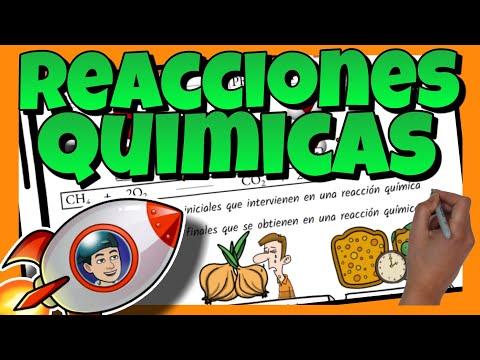
The main ideas of the video, summarized by AI
Chemical Reactions Basics
🧪 A chemical reaction is a process where initial substances called reactants transform into different final substances known as products.
🔄 During a chemical reaction, the atoms of the reactants simply reorder themselves in a different way to create the products.
🔥 Common everyday examples include fireworks producing heat, light, and sound, onions releasing tear gas when contacting air, and organic matter degrading or rusting.
Reaction Speed and Factors
⚡ Reaction rate refers to the amount of substance that is transformed in each unit of time during a chemical reaction.
⏱️ Not all reactions occur at the same speed; for instance, iron oxidation is a slow process, whereas the burning of a match is very fast.
🌡️ The speed of a reaction is influenced by factors such as the nature of the reactants, temperature, surface area contact, and reactant concentration.
Chemical Equations
📝 A chemical equation is an abbreviated representation of a chemical reaction that uses chemical formulas for the substances involved.
➡️ In a chemical equation, reactants are placed on the first member, products are placed on the second member, and both are separated by an arrow.
⚖️ Chemical equations must be balanced (tight), meaning that the number of atoms of each kind must agree equally on both members of the reaction.
Key Points & Insights
➡️ 🔬 Understand that reactants undergo transformation to yield products by rearranging their atomic structures.
➡️ 📈 Recognize that reaction speeds vary widely based on external conditions like temperature and surface area.
➡️ ⚖️ Always ensure that chemical equations have an equal number of atoms on both sides to maintain mass conservation.
🌐 Translate into 25+ languages
Sign in with Google, then upgrade to Pro to translate summaries, key moments and Q&A.
Click a timestamp to jump to that part of the video
Sign in to unlock Key Moments
Free with your Google account. No credit card needed.
Questions this video answers
Sign in to unlock Q&A
Free with your Google account. No credit card needed.
What viewers are saying about it
Sign in to unlock Top Comments
Free with your Google account. No credit card needed.
Full transcript with timestamps available.
Free plan: first 50% of each transcript, 2 views per day. Upgrade for unlimited
Full video URL: youtube.com/watch?v=PKS22hWZfKU