SummaryTube
Loading...
Language
This page is in English. Other languages open the translated homepage.
Loading...
Unlock AI power-ups — upgrade and save 20%! Pro is only $2/mo.

Summarize youtube video with AI directly from any YouTube video page. Save Time.
Install our free Chrome extension. Get expert level summaries with one click.
The main ideas of the video, summarized by AI
Evolutionary Significance of Reptiles
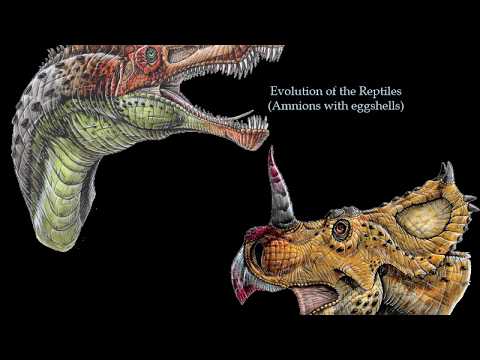
* 🦎 Reptiles represent the first group of vertebrates to master terrestrial environments by successfully reproducing independent of water.
* 🌍 Many modern mammal niches, such as those occupied by elephants or giraffes, were originally established and later vacated by dinosaurs, allowing mammalian evolution to flourish.
* 🧬 Reptiles are taxonomically complex; modern molecular phylogenetics suggests birds are deeply nested within the reptilian clade, making "Reptilia" a polyphyletic series rather than a traditional class.
Key Evolutionary Adaptations
* 🛡️ Integument & Protection: Reptiles evolved a cornified stratum corneum that prevents water loss, supported by an underlying adipose layer (fat) that acts as a shock absorber against environmental impact.
* 🥚 The Amniotic Egg: Often called an "independent biosphere," the shelled egg allowed vertebrates to move inland. It features specialized structures like the allantois for waste excretion, the yolk sac for nourishment, and albumin to dissipate physical shock.
* 🕳️ Skull Morphology: Evolution progressed through distinct skull types based on the number of temporal fenestrae (openings), which dictate muscle attachment capacity and bite strength.
Synapsids: The Mammalian Ancestors
* 🦴 Synapsid Skull: Characterized by a single temporal opening, this structure allowed for the development of the zygomatic arch and masseter muscles, enabling wider jaw opening and more powerful bites.
* 🦁 Pelicosauria: During the Permian period, these animals established the first complex terrestrial food webs, introducing heterodont teeth (differentiated teeth) and the first known apex predator-prey dynamics, such as the relationship between *Dimetrodon* and *Edaphosaurus*.
* 🦊 Therapsida: These represent the transition to mammals, showing evidence of whiskers, hair, and secondary sexual characteristics (e.g., *Estemmenosuchus*).
Key Points & Insights
* 🧪 Taxonomic Evolution: Vertebrate classification has shifted from morphology-based (number of skull holes) to modern molecular analysis, leading to debates regarding the status of the "Anapsid" (turtle) and "Synapsid" (mammal-like reptile) lineages.
* 📈 Punctuated Equilibrium: Evolution likely occurred in rapid bursts due to ecological opportunities during the Permian period, rather than through slow, gradual changes.
* ⚖️ Ecological Foundation: The *Lystrosaurus* and *Edaphosaurus* were among the first known terrestrial "herding" animals, creating the foundational population dynamics and prey-base requirements seen in modern ecosystems like the Serengeti.
🌐 Translate into 25+ languages
Sign in with Google, then upgrade to Pro to translate summaries, key moments and Q&A.
Click a timestamp to jump to that part of the video
Sign in to unlock Key Moments
Free with your Google account. No credit card needed.
Questions this video answers
Sign in to unlock Q&A
Free with your Google account. No credit card needed.
What viewers are saying about it
Sign in to unlock Top Comments
Free with your Google account. No credit card needed.
Full transcript with timestamps available.
Free plan: first 50% of each transcript, 2 views per day. Upgrade for unlimited
Full video URL: youtube.com/watch?v=YiQHRJNk-CY